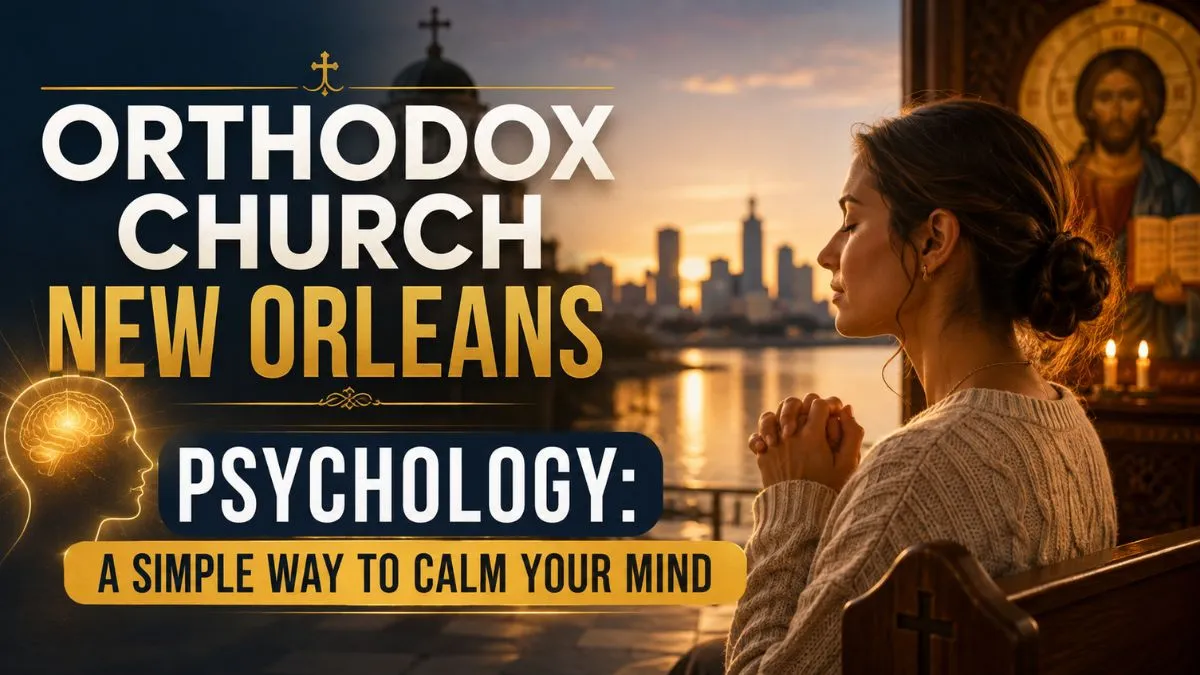
Stress rarely arrives with a warning. One day you’re handling responsibilities, and the next you’re carrying anxiety, mental fatigue, loneliness, and a constant sense of emotional exhaustion. Many people search for solutions in productivity hacks, self-help books, or endless scrolling, yet still feel unsettled.
That is where the conversation around psychology and StMarkNOLA becomes especially meaningful. Beyond religious tradition, many people are discovering that the practices found within the Orthodox Church New Orleans community offer valuable support for mental wellness, emotional balance, and a calmer state of mind.
Whether you’re struggling with burnout, overthinking, lack of purpose, or simply feeling disconnected, understanding the relationship between faith and mental health can offer a fresh perspective. Sometimes the most effective path toward peace is not adding more noise to life but finding a place where the mind can finally become quiet.
Why So Many People Feel Mentally Exhausted Today
Mental fatigue often develops gradually.
A demanding job. Family responsibilities. Financial pressure. Constant notifications. Endless comparisons on social media.
Psychologists frequently observe that modern stress is less about a single major event and more about the accumulation of small emotional burdens over time.
Common signs include:
- Difficulty concentrating
- Constant worrying
- Feeling emotionally drained
- Trouble sleeping
- Increased irritability
- Lack of motivation
- Feeling disconnected from others
Many people assume they simply need more discipline or stronger willpower. Yet psychology suggests that emotional recovery often requires something deeper: connection, reflection, meaning, and support.
This is one reason why faith communities continue to attract people seeking emotional stability.
The Surprising Psychology Behind Sacred Spaces
Have you ever entered a quiet church and immediately felt calmer?
That reaction is not imaginary.
Researchers studying environmental psychology have long observed that physical spaces influence emotional states. Lighting, sound, architecture, symbols, and atmosphere all affect how people think and feel.
Within the Orthodox Church New Orleans tradition, sacred spaces are intentionally designed to encourage reflection and stillness.
What Makes These Spaces Feel Different?
Several psychological factors contribute:
| Environmental Element | Psychological Effect |
|---|---|
| Soft lighting | Reduces sensory overload |
| Sacred imagery | Encourages reflection |
| Structured rituals | Creates emotional predictability |
| Quiet atmosphere | Supports mental clarity |
| Community presence | Reduces feelings of isolation |
The result is often a feeling of emotional relief that many visitors notice immediately.
A Story That Feels Familiar to Many
Imagine someone named Michael.
He works long hours, rarely disconnects from his phone, and spends most evenings worrying about unfinished tasks. Sleep becomes difficult. His mind constantly races.
One Sunday, a friend invites him to visit a service at StMarkNOLA.
Michael isn’t searching for religious answers. He simply wants a break from feeling overwhelmed.
During the service, something unexpected happens.
For the first time in months, nobody is asking him to respond to emails. Nobody expects productivity. Nobody is competing for attention.
There is simply silence, prayer, reflection, and community.
Psychologically, that experience creates what experts call a mental reset.
His problems don’t disappear.
But his nervous system finally gets a chance to rest.
Many people describe similar experiences when engaging with faith communities focused on contemplation and connection.
The Hidden Link Between Faith and Mental Health
The relationship between faith and mental health has become a growing area of interest among psychologists.
While faith is not a replacement for professional mental health treatment, studies consistently suggest that healthy spiritual practices can support emotional well-being.
How Faith Supports Emotional Health
Faith communities often provide:
- A sense of belonging
- Purpose during difficult seasons
- Hope during uncertainty
- Meaning beyond daily stress
- Supportive relationships
When individuals feel connected to something larger than themselves, emotional resilience often increases.
This does not eliminate challenges.
Instead, it changes how people respond to them.
What Psychology Can Learn From Ancient Orthodox Practices
One of the most fascinating aspects of Orthodox Christianity is how many of its traditions align with modern psychological principles.
Silence Encourages Mental Clarity
Many people spend their entire day surrounded by noise.
Orthodox practices create intentional moments of stillness.
Psychology shows that periods of quiet reflection can:
- Reduce mental clutter
- Improve focus
- Lower stress levels
- Support emotional regulation
Repetition Creates Emotional Stability
Repeated prayers and rituals may appear simple.
Yet psychologists recognize that healthy routines create predictability, which can reduce anxiety and increase feelings of safety.
Reflection Strengthens Self-Awareness
Personal reflection encourages people to examine thoughts, emotions, behaviors, and relationships.
This mirrors many techniques used in modern counseling and personal growth programs.
The Community Factor Most People Overlook
Many discussions about mental wellness focus on individual habits.
Meditation.
Exercise.
Sleep.
Nutrition.
All are important.
Yet psychology repeatedly shows that community support plays a major role in emotional health.
Why Isolation Hurts More Than We Realize
Humans are social beings.
When people feel disconnected, they often experience:
- Higher anxiety
- Increased depression symptoms
- Lower resilience
- Greater emotional distress
Communities such as StMarkNOLA provide opportunities for genuine human connection.
Not superficial online interaction.
Real conversations.
Real relationships.
Real support.
That sense of belonging can become a powerful source of emotional strength.
The Unexpected Power of Slowing Down
Modern culture often rewards speed.
Work faster.
Respond faster.
Think faster.
Produce more.
Yet many psychologists argue that chronic busyness contributes significantly to stress and burnout.
Orthodox traditions offer a different perspective.
They encourage people to slow down enough to notice:
- Their thoughts
- Their emotions
- Their relationships
- Their spiritual needs
This shift can create significant improvements in mental clarity and emotional balance.
Signs You Might Need to Slow Down
Consider these questions:
- Do you feel mentally tired even after resting?
- Do you struggle to enjoy quiet moments?
- Do you constantly feel behind?
- Do you find it difficult to focus?
If so, your mind may be asking for more than productivity techniques.
It may be asking for space to breathe.
Psychology, Mindfulness, and Spiritual Wellness
Many people associate mindfulness exclusively with modern wellness trends.
Yet contemplative practices have existed within faith traditions for centuries.
The Orthodox approach often emphasizes:
- Presence
- Awareness
- Reflection
- Gratitude
- Intentional living
These principles closely align with many psychological strategies used to support emotional regulation.
Key Similarities
| Psychology Concept | Orthodox Practice |
|---|---|
| Mindfulness | Prayerful attention |
| Emotional regulation | Reflection and prayer |
| Stress management | Quiet contemplation |
| Personal growth | Spiritual development |
| Resilience | Faith-based hope |
Although the language differs, the emotional benefits often overlap.
Small Daily Habits That Can Calm the Mind
You do not need to completely change your life overnight.
Small actions often produce meaningful results.
Try These Practices This Week
1. Spend Five Minutes in Silence
Turn off distractions.
Sit quietly.
Allow your thoughts to settle.
2. Practice Gratitude
Write down three positive moments from your day.
3. Connect With Others
Reach out to a friend, family member, or supportive community.
4. Create Reflection Time
Ask yourself:
- What is weighing on me today?
- What can I release?
- What truly matters?
5. Visit a Peaceful Space
Whether it is a church, park, or quiet room, give your mind a break from constant stimulation.
These simple habits support stress management, emotional resilience, and long-term mental wellness.
Why People Keep Returning to StMarkNOLA
Many visitors initially come seeking answers.
Others come seeking peace.
What often brings them back is something harder to describe.
A sense of calm.
A sense of belonging.
A sense that they do not need to carry every burden alone.
Psychologically, these experiences matter.
Humans thrive when they feel connected, understood, and supported.
Communities that provide those experiences naturally become places where emotional healing can begin.
That may explain why many people continue returning to StMarkNOLA even during difficult periods of life.
Important lessons from Orthodox Church New Orleans psychology include:
- Silence can improve mental clarity.
- Community support strengthens emotional resilience.
- Reflection promotes self-awareness.
- Faith and mental health can work together.
- Small daily practices often create meaningful change.
- Spiritual wellness can support emotional health.
- StMarkNOLA offers an environment that encourages peace and connection.
Conclusion
The conversation around psychology, mental wellness, and emotional health continues to evolve. Yet one truth remains consistent: people need spaces where they can slow down, reflect, connect, and recover from life’s pressures.
The experience many people find through Orthodox Church New Orleans traditions and the community of StMarkNOLA highlights an important lesson. Emotional well-being is not built solely through productivity, achievement, or constant activity. It grows through meaningful relationships, inner reflection, purpose, and hope.
The connection between faith and mental health is not about escaping life’s challenges. It is about developing the emotional resilience to face them with greater calm, clarity, and confidence.
Perhaps the most powerful step toward a calmer mind is not finding more to do—but finding a place where you can finally be still.
FAQs
1. How does psychology relate to Orthodox Church New Orleans practices?
Psychology explores how thoughts, emotions, and behaviors influence well-being. Many Orthodox practices encourage reflection, stillness, community connection, and emotional awareness, which can support mental wellness and emotional resilience in everyday life.
2. Can faith improve mental wellness?
Faith can provide meaning, hope, and community support, all of which are linked to positive emotional outcomes. While faith is not a substitute for professional treatment, it can complement healthy mental wellness practices and personal growth efforts.
3. Why do people find StMarkNOLA calming?
Many visitors describe experiencing peace through structured worship, quiet reflection, supportive relationships, and a welcoming environment. These elements can reduce feelings of stress, loneliness, and emotional overload while promoting mental clarity.
4. What role does community play in emotional health?
Community helps people feel connected, understood, and supported. Research consistently shows that strong social connections improve emotional resilience, reduce isolation, and contribute to better overall mental and emotional well-being.
5. What are simple ways to improve emotional resilience?
Daily habits such as reflection, gratitude, spending time in supportive communities, reducing distractions, and creating moments of quiet can strengthen emotional resilience. Consistency matters more than perfection when building long-term emotional health.