
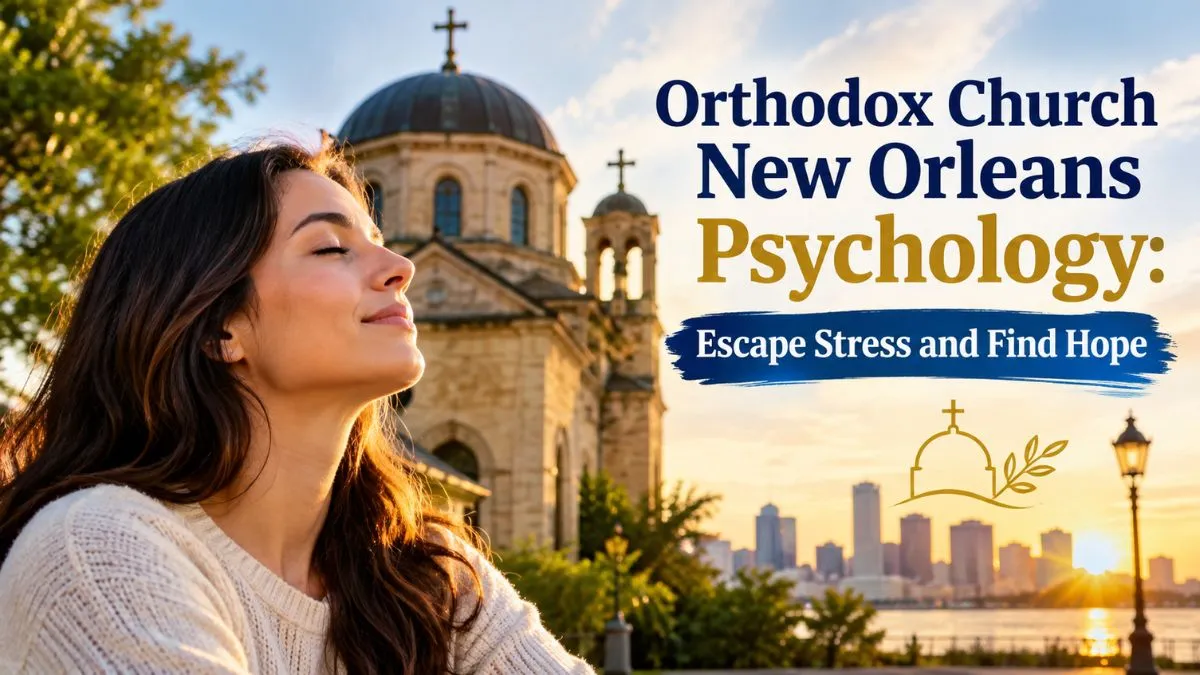
Stress rarely arrives alone. It often brings anxiety, overthinking, emotional exhaustion, and the feeling that life is moving forward while you are standing still. Many people spend years searching for ways to feel calm again, trying productivity systems, self-help books, and wellness trends without finding lasting relief.
This is where psychology and spiritual community often intersect in surprising ways. At StMarkNOLA, many visitors discover something they did not expect: a sense of peace that goes deeper than temporary stress relief. The connection between Orthodox Church New Orleans traditions and modern psychological principles reveals powerful lessons about mental wellness, emotional resilience, and finding hope during difficult seasons.
Whether you’re struggling with burnout, loneliness, emotional fatigue, or simply searching for greater meaning, understanding the psychological benefits of faith, reflection, and community can offer a fresh perspective on healing and personal growth.
Why Modern Stress Feels Different Than It Did a Generation Ago
Many people wake up already feeling overwhelmed.
Notifications arrive before breakfast. News headlines compete for attention. Work follows us home through screens. Even moments of rest can feel crowded by mental noise.
Psychologists often describe this as cognitive overload—a state where the brain processes more information than it can comfortably manage.
The result can include:
- Constant mental fatigue
- Difficulty concentrating
- Increased anxiety
- Emotional numbness
- Sleep disruptions
- Loss of motivation
What makes this challenge particularly difficult is that stress becomes normalized. People begin to assume feeling overwhelmed is simply part of life.
Yet the human mind was never designed to operate in a permanent state of alertness.
The Unexpected Psychology Behind Sacred Spaces
Walk into a historic Orthodox church and something often changes immediately.
The lighting is softer.
The pace feels slower.
Voices become quieter.
People naturally lower their stress levels without consciously trying.
This response isn’t accidental.
Environmental psychology suggests that physical surroundings influence emotional states. Spaces designed for contemplation can encourage the nervous system to shift away from stress-driven reactions.
What Happens Inside the Brain?
Researchers studying mindfulness, reflection, and contemplative practices have found several psychological benefits:
| Stress Response | Reflective Response |
|---|---|
| Racing thoughts | Mental clarity |
| Hypervigilance | Calm awareness |
| Emotional reactivity | Emotional regulation |
| Isolation | Connection |
| Burnout | Restoration |
Traditional Orthodox worship environments often encourage many of the same mental processes associated with mindfulness and focused attention.
The goal is not escape from reality. It is learning how to experience reality without being overwhelmed by it.
The Hidden Link Between Faith and Mental Health
For decades, psychologists have explored how belief systems influence emotional well-being.
One recurring finding stands out:
People who feel connected to meaning and purpose often demonstrate greater emotional resilience during hardship.
This doesn’t mean life becomes easier.
It means challenges are approached differently.
When setbacks occur, individuals with strong sources of meaning frequently report:
- Greater optimism
- Increased perseverance
- Stronger coping mechanisms
- Reduced feelings of hopelessness
- Higher life satisfaction
At StMarkNOLA, many individuals find that faith provides a framework for understanding suffering without becoming consumed by it.
That perspective can significantly impact emotional health.
A Story Many People Will Recognize
Imagine a professional named Sarah.
Her career was successful on paper.
She had financial stability, professional recognition, and a packed calendar.
Yet she felt exhausted.
Every accomplishment seemed temporary.
Every weekend disappeared into preparation for the next workweek.
One Sunday, after months of emotional burnout, she visited an Orthodox church with a friend.
She expected a religious service.
Instead, she noticed something else.
People weren’t rushing.
Nobody appeared interested in impressing anyone.
Conversations felt genuine.
For the first time in months, she experienced silence without discomfort.
The experience didn’t solve every problem overnight.
But it reminded her of something psychology repeatedly confirms:
Human beings need connection, meaning, and reflection just as much as productivity.
Why Community Support Matters More Than Most People Realize
One of the strongest predictors of emotional well-being isn’t income, achievement, or social status.
It’s belonging.
Loneliness has become a significant public health concern because human beings are deeply social by nature.
When people feel disconnected, stress often intensifies.
When they feel supported, resilience grows.
The Psychological Benefits of Community
Strong communities can help people:
- Feel understood during difficult seasons.
- Develop healthier coping strategies.
- Gain perspective during emotional challenges.
- Build confidence and self-worth.
- Reduce feelings of isolation.
At StMarkNOLA, community often becomes an important source of encouragement, especially for individuals facing personal struggles.
The experience of knowing others care about your well-being can have a powerful effect on mental wellness.
The Quiet Power of Rituals
Modern psychology increasingly recognizes the value of routines and rituals.
Rituals provide predictability.
Predictability creates psychological safety.
Psychological safety reduces stress.
This helps explain why many people find comfort in traditions that have remained consistent for centuries.
Why Rituals Calm the Mind
Regular practices can:
- Reduce decision fatigue
- Create emotional stability
- Improve focus
- Increase mindfulness
- Strengthen self-discipline
When life feels chaotic, familiar routines offer grounding.
Orthodox traditions provide structured opportunities for reflection, gratitude, and spiritual wellness that many people find emotionally restorative.
What Psychology Says About Hope
Hope is often misunderstood.
Many people think hope means expecting perfect outcomes.
Psychologists define it differently.
Hope is the belief that meaningful action remains possible even during uncertainty.
People with higher levels of hope generally:
- Recover faster from setbacks
- Experience lower stress levels
- Maintain motivation longer
- Adapt more effectively to change
A Surprising Insight
Research suggests that hope isn’t merely an emotion.
It is a skill.
And like any skill, it can be strengthened.
Practices that encourage gratitude, reflection, community support, and purposeful living often contribute to a stronger sense of hope.
These are also qualities deeply connected to many faith communities.
When Overthinking Takes Control
Overthinking is one of the most common mental habits associated with anxiety.
The mind becomes trapped in loops:
- What if I fail?
- What if I made the wrong choice?
- What if things never improve?
The problem is not thinking itself.
The problem is repetitive thinking without resolution.
A Different Approach
Many spiritual traditions encourage shifting attention away from endless analysis and toward intentional action.
Instead of asking:
“What if everything goes wrong?”
The focus becomes:
“What is the next right step?”
This small psychological shift often reduces anxiety and increases mental clarity.
Lessons From Orthodox Church New Orleans Psychology
The intersection of psychology and faith reveals several practical lessons.
1. Slow Down Before You Burn Out
Constant activity is not the same as meaningful progress.
Regular pauses support emotional resilience.
2. Prioritize Real Human Connection
Digital interactions cannot fully replace genuine community.
Relationships remain essential for emotional health.
3. Create Space for Reflection
Many people spend hours consuming information but very little time processing it.
Reflection helps organize thoughts and reduce mental clutter.
4. Develop Meaning Beyond Achievement
Success alone rarely creates lasting fulfillment.
Purpose often matters more than accomplishment.
5. Practice Gratitude Consistently
Gratitude shifts attention from scarcity toward abundance.
This psychological habit has been linked to greater life satisfaction and lower stress levels.
Key Takeaways for Better Mental Wellness
Remember These Insights
- Psychology and faith often complement each other.
- Community support improves emotional resilience.
- Meaning reduces the emotional impact of stress.
- Rituals can create stability during uncertain times.
- Hope is a psychological strength that can be developed.
- Reflection supports mental clarity and emotional balance.
- StMarkNOLA offers an environment that encourages connection, peace, and personal growth.
The Question Many People Never Ask
Most people ask:
“How can I become more productive?”
A more important question might be:
“How can I become more emotionally healthy?”
The answer rarely comes from working harder.
It often comes from reconnecting with what truly matters.
Meaning.
Relationships.
Purpose.
Hope.
These elements may seem simple, but psychology consistently shows they have enormous influence over long-term well-being.
Conclusion
The relationship between psychology, mental wellness, emotional health, and faith and mental health is more connected than many people realize. While modern life introduces new pressures and distractions, the core human need for purpose, belonging, hope, and inner peace remains unchanged.
The experience many people find through Orthodox Church New Orleans traditions and the community at StMarkNOLA highlights an important truth: healing is rarely about eliminating every challenge. Instead, it is about developing the emotional resilience, perspective, and support needed to face those challenges with confidence.
Whether you are navigating anxiety, burnout, loneliness, or simply searching for greater meaning, the combination of psychological insight, community support, spiritual wellness, and intentional reflection can help create a stronger foundation for lasting well-being. Sometimes the path toward hope begins with something surprisingly simple—a moment of quiet, a supportive community, and the willingness to believe that a healthier future is possible.
Frequently Asked Questions
1. How does psychology connect with faith and mental health?
Psychology explores how thoughts, emotions, and behaviors influence well-being, while faith often provides meaning, purpose, and community. Together, they can support emotional resilience, reduce stress, and help individuals navigate life’s challenges with greater confidence and hope.
2. Can StMarkNOLA help improve mental wellness?
Many people find that StMarkNOLA offers a supportive environment that encourages reflection, community connection, spiritual growth, and emotional balance. While it is not a substitute for professional mental health care, it can complement personal wellness efforts.
3. Why is community important for emotional health?
Community reduces feelings of loneliness and isolation. Having trusted relationships provides encouragement, perspective, and emotional support during difficult times, all of which contribute to stronger mental wellness and improved emotional resilience.
4. What psychological benefits can come from spiritual practices?
Spiritual practices such as prayer, reflection, gratitude, and participation in meaningful traditions may help reduce stress, improve focus, encourage mindfulness, and strengthen a person’s sense of purpose and emotional stability.
5. How can someone build emotional resilience during stressful periods?
Building emotional resilience often involves maintaining supportive relationships, practicing gratitude, developing healthy routines, focusing on meaningful goals, and seeking both practical and emotional support. Small, consistent actions can create lasting improvements in well-being.