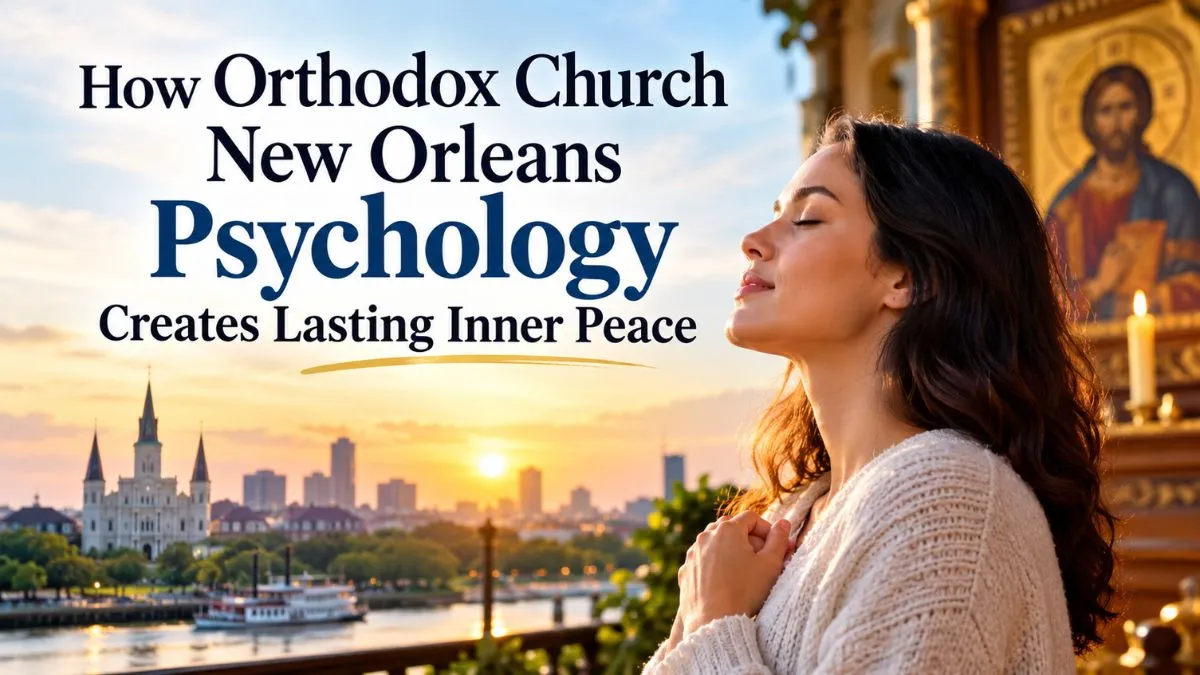
Stress rarely announces itself politely. It arrives as sleepless nights, racing thoughts, emotional exhaustion, and a constant feeling that something is missing. Many people spend years searching for solutions through productivity hacks, self-help books, and endless distractions, yet still feel overwhelmed.
This is where the conversation between psychology and faith becomes especially meaningful. At StMarkNOLA, many people discover something unexpected: a sense of calm that extends beyond temporary stress relief. The experience often touches deeper layers of mental wellness, emotional health, and personal purpose.
The relationship between Orthodox Church New Orleans psychology and inner peace is not about escaping life’s difficulties. It is about developing the emotional resilience to face them differently. Understanding why this happens reveals powerful lessons that anyone can apply, whether they are deeply religious, spiritually curious, or simply searching for greater emotional balance.
Why Modern Minds Struggle to Feel at Peace
Many people are surrounded by comfort yet feel emotionally drained.
Psychologists often observe several common causes:
- Chronic overstimulation
- Social isolation
- Constant comparison
- Lack of meaningful community
- Anxiety about the future
- Disconnection from personal values
The result is often a cycle of mental fatigue.
People wake up tired, rush through responsibilities, spend hours online, and end the day feeling emotionally depleted. Even moments of rest can feel unproductive because the mind never truly slows down.
This is where many individuals begin searching for something deeper than stress management.
The Surprising Psychology Behind Sacred Spaces
Walk into an Orthodox church and something feels different.
The lighting is softer.
The pace is slower.
The environment encourages reflection instead of reaction.
From a psychological perspective, this matters more than many people realize.
The Brain Responds to Calm Environments
Research in environmental psychology has long suggested that surroundings influence emotional states. Quiet, structured environments help reduce mental overload.
Within Orthodox Church New Orleans, visitors often encounter:
- Gentle candlelight
- Sacred artwork
- Meaningful symbolism
- Traditional chants
- Intentional silence
Together, these elements create conditions that encourage mental clarity.
Rather than demanding attention, the environment invites stillness.
That shift alone can feel profoundly restorative.
A Story Many People Will Recognize
Imagine Sarah.
She works full-time, manages family responsibilities, and constantly worries about finances. Her days are packed, but she feels increasingly disconnected from herself.
One Sunday, a friend invites her to visit StMarkNOLA.
She expects a traditional religious service.
Instead, she notices something unexpected.
Nobody seems rushed.
People genuinely greet one another.
The atmosphere feels peaceful rather than performative.
For the first time in months, her mind becomes quiet.
The problems in her life haven’t disappeared, but her relationship with those problems begins to change.
This experience reflects a powerful psychological principle:
Inner peace often begins when people feel safe, connected, and understood.
The Hidden Connection Between Faith and Mental Health
The conversation around faith and mental health has changed dramatically in recent years.
Mental health professionals increasingly recognize that spiritual practices can contribute positively to emotional well-being when approached in healthy ways.
How Faith Supports Emotional Stability
Faith often provides:
- Meaning during hardship
- Hope during uncertainty
- Community during loneliness
- Perspective during stress
- Purpose during confusion
These factors are strongly connected to psychological resilience.
People who believe their struggles have meaning often cope more effectively with adversity than those who feel completely overwhelmed by circumstances.
This does not replace professional mental health care when needed.
Instead, it can complement emotional healing and personal growth.
What Makes StMarkNOLA Different?
Many communities offer social connection.
Few offer the combination of history, spirituality, tradition, and emotional support found within an Orthodox community.
A Place Where People Don’t Have to Pretend
Modern culture often rewards appearances.
People feel pressure to seem successful, confident, and happy even when struggling internally.
At StMarkNOLA, many discover an environment where authenticity matters more than image.
This creates powerful psychological benefits.
When people stop performing and start connecting honestly:
- Anxiety decreases
- Emotional awareness increases
- Relationships deepen
- Self-acceptance grows
These are foundational elements of lasting mental wellness.
The Psychology of Ritual: Why Repetition Calms the Mind
Many people underestimate the emotional value of rituals.
Psychologists understand that predictable practices help regulate emotions.
Orthodox traditions include:
- Prayer
- Reflection
- Worship services
- Fasting periods
- Seasonal observances
These practices create rhythm and structure.
For individuals experiencing uncertainty, ritual provides stability.
Why Structure Helps Emotional Health
| Emotional Challenge | Psychological Effect of Ritual |
|---|---|
| Anxiety | Creates predictability |
| Overthinking | Redirects attention |
| Stress | Encourages calm reflection |
| Loneliness | Builds shared experiences |
| Burnout | Promotes intentional pauses |
The goal is not perfection.
The goal is creating moments where the mind can reset.
The Community Effect Nobody Talks About Enough
One of the strongest predictors of long-term happiness isn’t wealth.
It isn’t status.
It isn’t achievement.
It’s meaningful human connection.
Humans Are Designed for Community
Psychology consistently shows that supportive relationships improve:
- Emotional resilience
- Life satisfaction
- Stress recovery
- Physical health
- Mental health outcomes
The community found within Orthodox Church New Orleans often provides exactly this type of support.
People share celebrations.
They support one another during hardship.
They create bonds that extend beyond weekly gatherings.
That sense of belonging can dramatically improve emotional well-being.
Why Silence Feels Uncomfortable—and Healing
Many people avoid silence.
Phones fill every quiet moment.
Music plays constantly.
Notifications never stop.
Yet psychologists recognize that uninterrupted reflection is essential for emotional processing.
What Happens When the Noise Stops?
At first, silence can feel uncomfortable.
Thoughts emerge.
Concerns surface.
Unresolved emotions appear.
But eventually something shifts.
The mind slows down.
Clarity emerges.
Perspective returns.
This is one reason many visitors describe experiences at StMarkNOLA as emotionally refreshing.
The environment creates space for self-awareness.
And self-awareness is often the first step toward healing.
Emotional Resilience Is Built, Not Found
Many people search for confidence as if it were hidden somewhere.
Psychology suggests something different.
Resilience develops through repeated experiences of overcoming challenges.
Faith communities often reinforce this process.
Lessons That Strengthen Emotional Resilience
Accept what cannot be controlled
Trying to control everything creates chronic stress.
Focus on meaningful actions
Purpose reduces feelings of helplessness.
Practice gratitude consistently
Gratitude shifts attention toward what remains good.
Lean on supportive relationships
Connection strengthens coping abilities.
Develop patience
Growth rarely happens overnight.
These principles align closely with both psychological research and traditional spiritual wisdom.
The Unexpected Benefit of Looking Beyond Yourself
Many mental health struggles become more intense when life revolves entirely around personal worries.
Helping others creates a different perspective.
Service and Well-Being
Studies in positive psychology frequently connect acts of service with improved well-being.
People who contribute to others often experience:
- Greater life satisfaction
- Reduced feelings of isolation
- Improved mood
- Stronger sense of purpose
Community involvement through StMarkNOLA often encourages this outward focus.
Ironically, some people find peace when they stop chasing it directly and start serving others.
Practical Lessons You Can Apply Today
You don’t need to completely change your life to benefit from these insights.
Try these simple practices:
1. Create Five Minutes of Silence Daily
No phone.
No music.
No multitasking.
Simply sit quietly and observe your thoughts.
2. Build a Weekly Reflection Habit
Ask yourself:
- What drained me this week?
- What encouraged me?
- What truly mattered?
3. Strengthen Community Connections
Reach out to someone intentionally.
Meaningful conversation supports emotional health.
4. Practice Gratitude Before Sleep
Write down three positive moments from your day.
Small moments matter.
5. Seek Purpose Over Productivity
Being busy is not the same as living meaningfully.
Focus on what creates lasting fulfillment.
Conclusion: Where Psychology Meets Lasting Inner Peace
The growing interest in Orthodox Church New Orleans psychology reflects something many people are beginning to recognize: emotional well-being involves more than reducing symptoms. True mental wellness often emerges from meaning, connection, reflection, and hope.
At StMarkNOLA, many individuals discover an environment that supports emotional health, strengthens emotional resilience, and offers practical pathways toward greater peace. The combination of community support, spiritual wisdom, structured practices, and psychological insight creates conditions where people can experience genuine inner calm.
Whether you are navigating anxiety, burnout, loneliness, or simply searching for greater purpose, the relationship between psychology, faith and mental health, and personal growth offers valuable lessons. Sometimes peace is not found by running faster. Sometimes it appears when we finally slow down, reflect deeply, and reconnect with what matters most.
FAQs
1. How does psychology explain the sense of peace people feel in Orthodox churches?
Psychology suggests that calm environments, meaningful rituals, social connection, and opportunities for reflection help reduce stress and support emotional regulation. These elements can create feelings of safety, belonging, and mental clarity that contribute to lasting inner peace.
2. Can faith and mental health work together effectively?
Yes. Faith and mental health often complement one another. Spiritual practices can provide hope, meaning, community support, and emotional resilience, while professional mental health care addresses clinical and psychological needs. Many people benefit from both approaches working together.
3. What role does StMarkNOLA play in mental wellness?
StMarkNOLA offers a supportive community, opportunities for reflection, spiritual guidance, and meaningful relationships. These experiences can contribute positively to mental wellness by helping individuals feel connected, understood, and emotionally supported during life’s challenges.
4. Why is emotional resilience important for long-term well-being?
Emotional resilience helps people recover from setbacks, manage stress, and adapt to change. It strengthens confidence, improves coping skills, and supports healthier responses to adversity, making it a key component of both emotional health and personal growth.
5. What simple practices can improve emotional well-being every day?
Daily silence, gratitude journaling, meaningful social connections, reflective prayer or meditation, and intentional acts of kindness can significantly improve emotional well-being. Consistent small habits often create greater long-term benefits than occasional major lifestyle changes.