
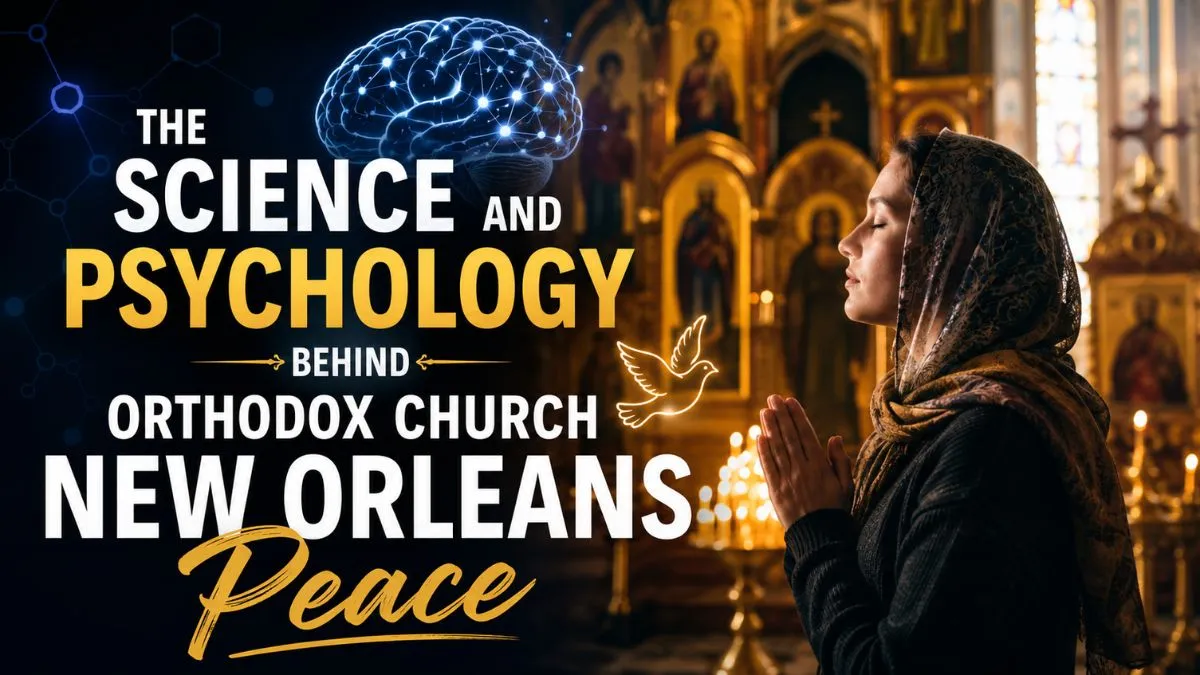
For many people, stress doesn’t arrive dramatically. It builds quietly through sleepless nights, endless notifications, work pressure, family responsibilities, and the constant feeling that something important is being missed. Anxiety becomes normal. Mental fatigue becomes routine.
This is where the conversation around psychology, emotional well-being, and spiritual life becomes deeply relevant. At StMarkNOLA, many visitors describe a surprising sense of calm that seems difficult to explain at first. Why does stepping into an Orthodox Church New Orleans community often leave people feeling lighter, more grounded, and emotionally refreshed?
The answer isn’t only spiritual. Modern psychology, neuroscience, and behavioral science offer fascinating insights into why ancient practices continue to support mental wellness, emotional health, and faith and mental health in meaningful ways. What appears to be a religious experience on the surface often aligns with powerful psychological principles that help the human mind recover from stress and reconnect with purpose.
Why the Human Brain Craves Stillness More Than Ever
The human brain was never designed for nonstop stimulation.
Every day, people process thousands of decisions, notifications, advertisements, and social comparisons. This constant activity places significant demands on attention and emotional regulation.
Psychologists often describe mental exhaustion as a state where the brain struggles to switch off from problem-solving mode. When this happens, individuals may experience:
- Increased anxiety
- Emotional irritability
- Difficulty concentrating
- Sleep disturbances
- Reduced resilience
- Feelings of loneliness
Ancient Orthodox traditions offer something surprisingly rare in modern culture: intentional stillness.
Inside churches like StMarkNOLA, silence is not treated as emptiness. It becomes a tool for mental restoration.
Research in psychology consistently shows that quiet reflective environments can reduce cognitive overload and improve emotional regulation. This helps explain why many people report feeling calmer before they even leave the church building.
The Hidden Psychology of Sacred Spaces
Why Certain Environments Instantly Change How We Feel
Have you ever walked into a place and immediately felt different?
Psychologists call this environmental priming. Our surroundings influence our emotions, thoughts, and behaviors more than we often realize.
Orthodox churches intentionally incorporate elements that affect the senses:
- Soft lighting
- Sacred imagery
- Incense
- Chanting
- Architectural symmetry
- Quiet reflection
Together, these create an atmosphere that signals safety to the nervous system.
When the brain perceives safety, it naturally reduces its stress response. Heart rate slows. Breathing deepens. Attention shifts away from external worries.
This isn’t simply a religious phenomenon. It’s a psychological one.
A Simple Comparison
| High-Stress Environment | Sacred Reflective Environment |
|---|---|
| Constant notifications | Minimal distractions |
| Mental multitasking | Focused attention |
| Social comparison | Personal reflection |
| Fast decision-making | Intentional stillness |
| Cognitive overload | Mental clarity |
The contrast helps explain why many people experience immediate relief when entering a sacred space.
The Surprising Role of Ritual in Emotional Health
Modern culture often associates rituals with religion alone.
Psychology tells a different story.
Humans naturally seek rituals because they provide structure during uncertainty.
Whether it’s a morning coffee routine, a pre-game ritual, or a nightly reflection practice, predictable actions reduce anxiety by creating a sense of stability.
Orthodox worship contains centuries-old rituals that support emotional regulation.
These practices help people:
- Slow down mentally.
- Focus attention.
- Create emotional consistency.
- Build resilience during difficult seasons.
- Strengthen personal meaning.
For someone facing burnout or emotional exhaustion, ritual offers something powerful: predictability in an unpredictable world.
A Story That Feels Familiar to Many
Consider a professional who spends every day juggling deadlines, emails, and responsibilities.
Over time, stress becomes their default setting.
They sleep poorly.
They struggle to concentrate.
Even moments of rest feel unproductive.
One Sunday, they visit StMarkNOLA with a friend.
Nothing dramatic happens.
No instant solution appears.
Yet something changes.
For the first time in weeks, they sit quietly without checking a screen.
They hear voices singing together rather than competing for attention.
They observe people gathered around shared values rather than shared complaints.
They leave feeling noticeably calmer.
Psychology suggests that this experience is not accidental.
It reflects the brain’s response to belonging, stillness, meaning, and sensory regulation.
Community Support: One of Psychology’s Most Powerful Protective Factors
The Mental Health Benefit Many People Overlook
Loneliness has become one of the most significant challenges affecting emotional well-being.
Researchers consistently find that social connection is strongly linked to:
- Better emotional resilience
- Reduced anxiety
- Improved life satisfaction
- Lower stress levels
- Stronger coping abilities
This is where church communities provide unique value.
At StMarkNOLA, relationships extend beyond weekly services.
People support each other through:
- Life transitions
- Personal struggles
- Celebrations
- Grief
- Family challenges
These connections create a sense of belonging that many people struggle to find elsewhere.
The psychological benefit is enormous.
Humans are wired for connection. Feeling supported changes how the brain interprets stress.
Instead of facing challenges alone, individuals feel connected to something larger than themselves.
The Neuroscience of Prayer and Reflection
What Happens Inside the Brain?
Prayer is often viewed exclusively through a spiritual lens.
Neuroscience adds another fascinating perspective.
When people engage in focused prayer or contemplation, several psychological processes occur:
- Attention becomes more focused.
- Mental distractions decrease.
- Emotional regulation improves.
- Stress responses may decrease.
- Self-awareness increases.
Many psychologists compare these effects to certain forms of mindfulness practice.
Both involve intentional focus and present-moment awareness.
The difference is that prayer often adds an additional layer of meaning, purpose, and relationship with God, which can further support emotional resilience.
Key Insight
Meaning reduces suffering.
People who believe their challenges have purpose often cope more effectively with adversity.
This connection between meaning and resilience is one of the strongest findings in modern psychology.
Why Ancient Traditions Feel Surprisingly Relevant Today
One of the most interesting psychological observations is that many ancient practices directly address modern problems.
Consider the challenges people commonly face today:
| Modern Challenge | Ancient Orthodox Response |
|---|---|
| Constant distraction | Silence and prayer |
| Social isolation | Community fellowship |
| Anxiety | Reflection and trust |
| Burnout | Spiritual rest |
| Lack of purpose | Meaning-centered living |
| Emotional overwhelm | Structured worship |
What makes these traditions powerful is their consistency.
They have helped people navigate uncertainty, grief, fear, and stress across generations.
Emotional Resilience Begins With Something Unexpected
Many people assume resilience means becoming tougher.
Psychology suggests something different.
True emotional resilience often begins with acceptance.
Orthodox spirituality encourages individuals to acknowledge struggles honestly rather than hide them.
This aligns closely with psychological research.
Suppressing emotions tends to increase distress.
Recognizing emotions allows people to process them more effectively.
At StMarkNOLA, faith practices often encourage:
- Self-reflection
- Gratitude
- Humility
- Forgiveness
- Patience
Each of these traits has been linked to stronger emotional health outcomes.
The Curiosity Gap: Why Do People Feel Peace Before They Understand It?
This may be the most fascinating aspect of all.
Many visitors report feeling peaceful before they can explain why.
The reason often involves multiple psychological factors working together simultaneously:
- Reduced sensory overload
- Increased mindfulness
- Strong community presence
- Meaningful symbolism
- Emotional safety
- Shared purpose
- Structured reflection
The brain responds to these conditions almost immediately.
Long before a person analyzes the experience intellectually, the nervous system may already be responding positively.
Practical Lessons You Can Apply Today
You don’t need to overhaul your life overnight to benefit from these insights.
Consider trying the following:
1. Schedule Five Minutes of Silence
Even brief periods of intentional quiet can reduce mental clutter.
2. Create Meaningful Rituals
Consistency helps reduce anxiety and improve emotional stability.
3. Prioritize Community
Reach out to people who encourage growth and positivity.
4. Practice Reflection
Spend a few moments each day evaluating thoughts, emotions, and priorities.
5. Seek Purpose Beyond Productivity
Your value is not measured solely by output or achievement.
6. Make Space for Spiritual Wellness
Faith practices can complement healthy psychological habits and support long-term well-being.
Conclusion: Where Psychology, Faith, and Emotional Health Meet
The peace people experience within an Orthodox Church New Orleans community is not simply a matter of tradition or atmosphere. It reflects something deeper about human nature itself.
Modern psychology continues to confirm what many faith communities have practiced for centuries: people thrive when they experience meaning, belonging, reflection, and connection. These elements strengthen mental wellness, support emotional health, and build lasting emotional resilience.
At StMarkNOLA, the combination of community, prayer, sacred space, and spiritual purpose creates conditions that help many individuals step away from anxiety, burnout, loneliness, and mental fatigue. While faith and psychology approach well-being from different perspectives, they often point toward the same destination: a calmer mind, a healthier heart, and a more purposeful life.
Perhaps the greatest lesson is that peace is rarely found by adding more noise. More often, it begins when we create space to listen, reflect, connect, and grow.
FAQs
1. How does psychology explain the peace people feel in Orthodox churches?
Psychology suggests that peaceful church environments reduce sensory overload, encourage mindfulness, and create feelings of safety. Elements such as quiet reflection, meaningful rituals, and supportive communities help regulate stress responses and promote emotional well-being.
2. Can faith and mental health work together?
How does psychology explain the peace people feel in Orthodox churches?
Psychology suggests that peaceful church environments reduce sensory overload, encourage mindfulness, and create feelings of safety. Elements such as quiet reflection, meaningful rituals, and supportive communities help regulate stress responses and promote emotional well-being.
3. What makes StMarkNOLA helpful for emotional well-being?
StMarkNOLA offers a combination of community support, spiritual reflection, structured worship, and opportunities for meaningful connection. These factors can help reduce feelings of isolation while supporting emotional health and personal growth.
4. Are prayer and mindfulness psychologically similar?
StMarkNOLA offers a combination of community support, spiritual reflection, structured worship, and opportunities for meaningful connection. These factors can help reduce feelings of isolation while supporting emotional health and personal growth
5. How can someone improve emotional resilience using faith-based practices?
Simple habits such as prayer, gratitude, reflection, participation in a supportive community, and regular spiritual routines can strengthen emotional resilience. These practices help individuals navigate stress while maintaining perspective, purpose, and emotional balance.