
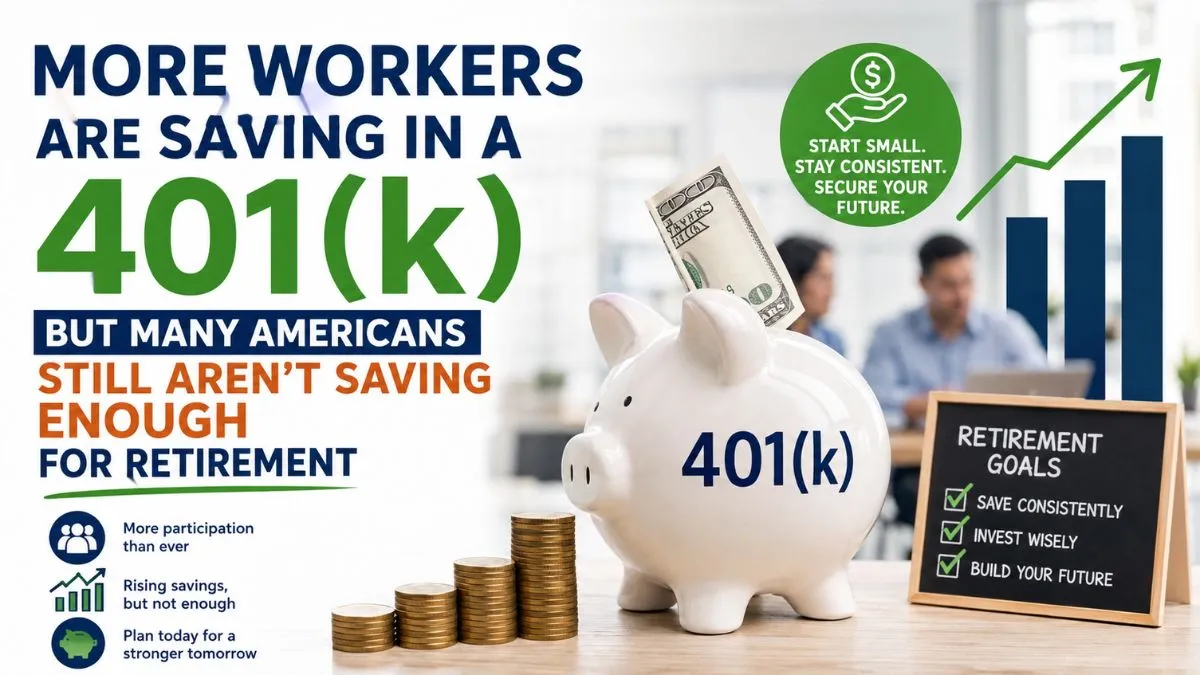
Retirement saving participation is rising across the United States, which sounds like good news. More employees are contributing to a 401(k) plan, taking advantage of workplace retirement benefits, and recognizing the importance of long-term financial security.
The challenge is that participation alone does not guarantee a comfortable retirement. Many workers contribute too little, start too late, or fail to increase their savings as income grows. As a result, millions of Americans could face a significant income gap during retirement despite consistently contributing to their employer-sponsored plans.
Understanding why this gap exists—and what workers can do about it—can help turn a good habit into a strong retirement strategy.
Why Are More Workers Saving in a 401(k)?
A 401(k) is an employer-sponsored retirement account that allows workers to save and invest money on a tax-advantaged basis for future retirement needs.
Recent workplace trends have made retirement saving easier than ever. Many employers now automatically enroll employees in retirement plans, while payroll deduction systems remove the need for manual contributions.
Several factors are driving higher participation:
- Automatic enrollment programs
- Increased financial literacy efforts
- Employer matching contributions
- Rising awareness about retirement costs
- Easier access to online account management
For many workers, contributing to a 401(k) is now a standard part of employment rather than an optional benefit.
This shift is encouraging because it means more households are building retirement assets earlier in their careers.
The Bigger Problem: Saving Enough Is Different From Saving at All
Retirement readiness depends not only on participation but also on contribution rates, investment growth, and long-term consistency.
Imagine two employees:
| Worker | Annual Salary | 401(k) Contribution Rate |
|---|---|---|
| Employee A | $60,000 | 3% |
| Employee B | $60,000 | 12% |
Both are participating in a 401(k). However, Employee B is likely to accumulate significantly more retirement wealth over a 30-year career.
This example highlights a common misunderstanding. Simply contributing to a retirement plan does not automatically create financial security.
Many workers save enough to feel responsible today but not enough to support future retirement goals.
How Much Should Workers Actually Save?
Financial planners commonly recommend saving 10%–15% of income annually for retirement, including employer contributions.
The ideal savings rate varies depending on:
- Current age
- Retirement goals
- Income level
- Expected retirement age
- Social Security benefits
- Existing savings
For example:
| Age Group | Recommended Savings Rate |
|---|---|
| 20s | 10%–15% |
| 30s | 12%–15% |
| 40s | 15%–20% |
| 50+ | 15%–25% |
Workers who begin saving later often need significantly higher contribution rates to catch up.
The reality is that many employees contribute only enough to receive an employer match, leaving substantial retirement savings opportunities unused.
The Power of Employer Matching Contributions
An employer match is additional money contributed by a company when employees save in their retirement plan.
Employer matching is often described as “free money” because it boosts retirement savings without requiring additional work from the employee.
A common matching formula might be:
- Employee contributes 6%
- Employer matches 50% of contributions
- Employee receives an additional 3%
For a worker earning $70,000 annually:
- Employee contribution: $4,200
- Employer match: $2,100
- Total annual retirement contribution: $6,300
Over decades, compounded investment growth can transform these contributions into substantial retirement assets.
Workers who fail to contribute enough to receive the full match may be leaving thousands of dollars on the table every year.
Why Many Americans Are Falling Behind
Retirement savings gaps often result from behavioral and financial challenges rather than a lack of awareness.
Many workers understand the importance of retirement planning but struggle to prioritize it.
Common obstacles include:
Rising Living Costs
Housing, healthcare, childcare, and everyday expenses continue to consume larger portions of household budgets.
Debt Obligations
Student loans, credit cards, and personal loans often compete directly with retirement contributions.
Delayed Saving
Many employees postpone retirement planning, believing they will save more later.
Lack of Contribution Increases
Workers frequently keep the same contribution rate for years, even after receiving raises.
Market Concerns
Some individuals reduce contributions during market downturns, potentially missing long-term growth opportunities.
These factors can quietly erode retirement preparedness over time.
How Automatic Escalation Is Helping Workers Save More
Automatic escalation gradually increases employee contribution rates over time without requiring manual action.
Many employers now pair automatic enrollment with annual contribution increases.
For example:
| Year | Contribution Rate |
|---|---|
| Year 1 | 4% |
| Year 2 | 5% |
| Year 3 | 6% |
| Year 4 | 7% |
Because increases are gradual, workers often experience little impact on take-home pay while significantly improving long-term retirement outcomes.
Financial experts frequently recommend increasing contributions whenever income rises.
Even a 1% annual increase can produce meaningful results over a career.
The Hidden Cost of Waiting
Time is one of the most valuable assets in retirement investing because of compound growth.
Consider two workers:
Worker A
- Starts investing at age 25
- Saves $300 monthly
Worker B
- Starts investing at age 35
- Saves $300 monthly
Even if both earn similar investment returns, Worker A could accumulate substantially more retirement wealth simply because their money had an extra decade to grow.
This demonstrates why contribution timing can matter just as much as contribution size.
Starting early often reduces the pressure to save aggressively later.
Are Younger Workers Improving Their Retirement Habits?
Younger employees are increasingly engaging with workplace retirement plans through digital tools and automatic enrollment programs.
Many members of Generation Z and younger Millennials are entering the workforce with greater exposure to financial education content.
Popular trends include:
- Retirement planning apps
- Digital budgeting platforms
- Financial wellness programs
- Robo-advisors
- Online investment education
These tools help make retirement planning more accessible than previous generations experienced.
However, younger workers still face significant challenges, including housing affordability concerns and student debt burdens.
The key advantage they possess is time.
Even modest contributions made consistently over decades can generate significant retirement savings.
Practical Ways to Increase 401(k) Savings Without Feeling the Impact
Small adjustments can create substantial long-term improvements in retirement readiness.
Workers looking to strengthen retirement savings can consider:
Increase Contributions After Raises
Direct part of every salary increase toward retirement savings before lifestyle spending expands.
Capture the Full Employer Match
Ensure contributions are high enough to receive all available matching funds.
Use Automatic Escalation
Enroll in automatic contribution increases whenever possible.
Review Investment Allocations
Maintain an investment strategy aligned with age, risk tolerance, and retirement goals.
Avoid Early Withdrawals
Taking money from retirement accounts early can reduce future growth potential and trigger penalties.
Monitor Progress Annually
Review savings rates and retirement projections at least once each year.
These actions can help workers move from basic participation toward genuine retirement preparedness.
What the Future of Retirement Saving Looks Like
The future of retirement planning will likely emphasize automation, personalization, and greater employee engagement.
Employers, policymakers, and financial institutions continue searching for ways to improve retirement outcomes.
Key trends include:
- Expanded automatic enrollment
- Higher default contribution rates
- Improved retirement income tools
- Enhanced financial wellness education
- Greater transparency regarding retirement readiness
While participation rates are improving, future success will depend on whether workers increase contribution levels enough to meet long-term financial needs.
The growing focus is shifting from simply getting employees into retirement plans to helping them save at levels that support lasting financial independence.
Final Thoughts
More workers are saving in a 401(k) than ever before, representing an important step toward stronger retirement security. Yet participation alone does not guarantee financial readiness. The biggest challenge facing many Americans is not whether they save, but whether they save enough.
Workers who maximize employer matching contributions, gradually increase savings rates, and begin investing early often place themselves in a stronger position for retirement. Small contribution increases today can translate into significant financial advantages decades from now. For employees seeking long-term stability, the goal should be more than participation—it should be building a retirement strategy capable of supporting the lifestyle they want in the future.
FAQ
How much should I contribute to my 401(k) if my employer offers a match?
Financial experts often recommend contributing at least enough to receive the full employer match because it provides an immediate return on your savings. Many workers ultimately aim for a total retirement savings rate of 10%–15% of income, including employer contributions.
Is it better to start saving early or contribute more later?
Starting early generally provides a significant advantage because compound growth has more time to work. Even smaller contributions made consistently over decades can potentially grow larger than higher contributions started much later, making time one of the most valuable retirement-saving factors.