
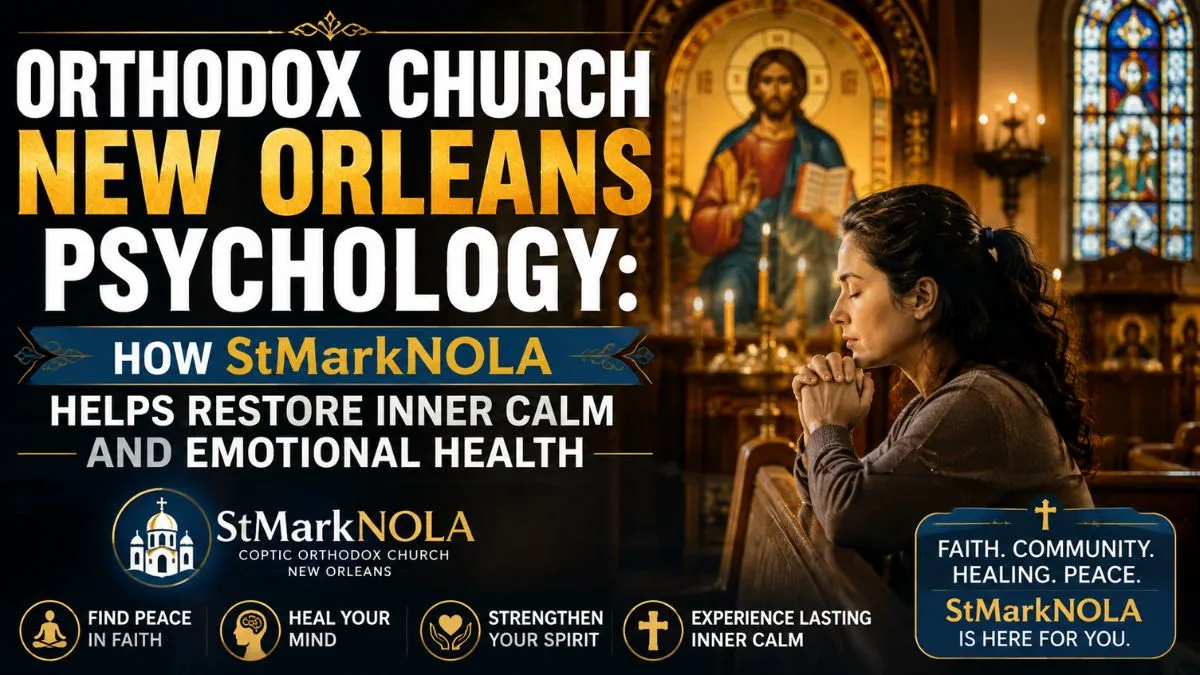
Stress, anxiety, burnout, loneliness, and constant overthinking have become common struggles for many people. While therapy, self-care, and healthy habits remain important, many individuals are also searching for deeper sources of peace and emotional stability. This is where psychology and faith often intersect in meaningful ways.
At StMarkNOLA, an important part of the Orthodox Church New Orleans community, many visitors describe experiencing a sense of calm, connection, and emotional relief. Psychology offers several explanations for why faith communities can positively influence mental wellness, emotional health, and overall well-being. From community support and mindfulness-like practices to meaningful rituals and spiritual reflection, these experiences can help reduce mental strain and improve emotional resilience.
Understanding this connection matters because emotional well-being is not only about managing symptoms. It is also about finding purpose, belonging, hope, and stability during life’s challenges.
What Is Orthodox Church New Orleans Psychology?
Orthodox Church New Orleans Psychology refers to the psychological and emotional benefits people may experience through participation in Orthodox Christian worship, community life, spiritual practices, and personal reflection.
Rather than replacing professional mental health care, faith-based experiences often complement healthy emotional habits. Psychology research has long explored how spirituality, social support, gratitude, mindfulness, and meaning-making contribute to better emotional outcomes.
At StMarkNOLA, these elements naturally come together through worship, fellowship, prayer, and community engagement.
Why Do People Feel Peaceful Inside an Orthodox Church?
Many people experience peace in sacred spaces because they reduce mental distractions, encourage reflection, and create a sense of emotional safety.
Several psychological factors contribute to this feeling:
1. Reduced Mental Noise
Modern life constantly competes for attention.
Inside a church environment, people often experience:
- Less digital stimulation
- Fewer interruptions
- More reflective thinking
- Increased self-awareness
Psychologists recognize that quiet environments help the brain recover from cognitive overload.
2. Predictable Rituals Create Stability
Human beings naturally seek structure.
Orthodox traditions include:
- Prayer routines
- Worship services
- Sacred symbols
- Liturgical practices
These predictable experiences provide emotional consistency during uncertain times.
3. A Sense of Belonging
One of the strongest predictors of emotional well-being is social connection.
Feeling accepted within a supportive community can help reduce:
- Loneliness
- Social isolation
- Emotional distress
- Feelings of hopelessness
This is one reason many visitors report feeling welcomed and supported at StMarkNOLA.
The Psychology of Faith and Mental Health
Faith and mental health are connected through meaning, hope, coping skills, and social support.
Psychology does not view faith simply as a belief system. Many researchers study how spiritual practices influence behavior, emotions, resilience, and life satisfaction.
How Faith Supports Emotional Health
Faith can help people:
- Process grief
- Handle uncertainty
- Build optimism
- Develop forgiveness
- Strengthen emotional resilience
When individuals face difficult circumstances, having a framework that provides meaning often helps reduce feelings of helplessness.
The Role of Hope
Hope is a powerful psychological resource.
People who maintain hope often:
- Adapt more effectively to challenges
- Recover more quickly from setbacks
- Experience greater emotional stability
Orthodox teachings frequently emphasize hope, perseverance, and spiritual growth, all of which align with established psychological principles.
How StMarkNOLA Supports Mental Wellness
StMarkNOLA supports mental wellness by encouraging community connection, reflection, spiritual growth, and emotional support.
Mental wellness is about more than the absence of illness. It includes feeling connected, purposeful, balanced, and emotionally secure.
Community Support Matters
Psychologists consistently identify social support as one of the most important protective factors for mental health.
Community support can provide:
- Encouragement during difficult periods
- Practical help during crises
- Positive relationships
- Emotional validation
At StMarkNOLA, community interaction often helps individuals feel less alone in their struggles.
Shared Experiences Reduce Isolation
Many people quietly carry emotional burdens.
When individuals connect with others who understand life’s challenges, they often experience:
- Increased confidence
- Greater emotional comfort
- Reduced loneliness
- Stronger resilience
These benefits contribute directly to better emotional health.
Surprising Psychology Insights Behind Orthodox Worship
Several aspects of Orthodox worship mirror psychological practices that promote calmness and emotional regulation.
While worship is primarily spiritual, some elements align with established psychological concepts.
Mindful Attention
Prayer and reflection encourage focused awareness.
This resembles aspects of mindfulness, including:
- Present-moment awareness
- Reduced mental clutter
- Improved emotional regulation
- Increased mental clarity
Sensory Engagement
Orthodox worship often engages multiple senses through:
- Sacred music
- Visual symbolism
- Incense
- Ritual movement
Psychologically, sensory experiences can help people become more present and emotionally grounded.
Emotional Processing
Worship creates opportunities for:
- Gratitude
- Reflection
- Forgiveness
- Self-examination
These practices support healthier emotional processing and personal growth.
Emotional Resilience: What Psychology Teaches Us
Emotional resilience is the ability to adapt, recover, and continue moving forward despite challenges.
Resilience is not about avoiding pain.
It is about developing healthy ways to respond to difficulties.
Characteristics of Emotionally Resilient People
Resilient individuals often:
- Maintain perspective during stress.
- Seek support when needed.
- Focus on meaningful goals.
- Practice gratitude.
- Accept setbacks as part of life.
Faith communities frequently reinforce these qualities through encouragement, mentorship, and shared values.
How StMarkNOLA Encourages Resilience
Visitors often find opportunities to:
- Build supportive relationships
- Develop spiritual discipline
- Reflect on life’s purpose
- Learn from experienced community members
These experiences can strengthen both spiritual wellness and emotional resilience.
The Connection Between Spiritual Wellness and Mental Clarity
Spiritual wellness can contribute to mental clarity by helping individuals organize priorities, reduce inner conflict, and focus on meaningful goals.
Many people feel overwhelmed because their attention is scattered across countless responsibilities and concerns.
Spiritual reflection encourages individuals to ask important questions:
- What truly matters?
- What can I control?
- What should I let go of?
- How can I serve others?
Psychologically, clarity often emerges when people reconnect with their core values.
Practical Benefits of Mental Clarity
Improved mental clarity may lead to:
- Better decision-making
- Reduced anxiety
- Increased confidence
- Greater emotional balance
- Healthier relationships
This is one reason many people seek both psychological and spiritual guidance.
Orthodox Church and Psychology: A Comparison
| Psychology Focus | Orthodox Faith Focus | Shared Benefit |
|---|---|---|
| Emotional awareness | Self-reflection | Greater self-understanding |
| Stress management | Prayer and contemplation | Reduced emotional tension |
| Community support | Church fellowship | Stronger relationships |
| Purpose and meaning | Spiritual purpose | Increased resilience |
| Gratitude practices | Thankfulness and worship | Positive emotional health |
| Personal growth | Spiritual growth | Long-term well-being |
This comparison highlights why many people view psychology and faith as complementary rather than competing approaches.
A Real-Life Story Many People Relate To
Emotional healing often begins when people feel heard, understood, and connected.
Imagine someone experiencing chronic stress from work, family responsibilities, and constant digital distractions.
They begin feeling:
- Mentally exhausted
- Emotionally disconnected
- Overwhelmed by daily pressures
After becoming involved in a supportive faith community such as StMarkNOLA, they start experiencing something different.
Not because every problem disappears.
Instead, they gain:
- Supportive relationships
- Regular reflection
- A stronger sense of purpose
- Healthier emotional habits
Psychology suggests that these factors can significantly improve emotional well-being over time.
Practical Lessons You Can Apply Today
Small daily practices can improve emotional health and support inner calm.
Here are practical strategies inspired by both psychology and spiritual wisdom.
1. Create Quiet Reflection Time
Spend 10 minutes daily without distractions.
Focus on:
- Gratitude
- Prayer
- Reflection
- Journaling
2. Strengthen Community Connections
Reach out to:
- Friends
- Family members
- Support groups
- Faith communities
Human connection remains one of the strongest predictors of mental wellness.
3. Practice Gratitude Daily
Write down three things you appreciate.
Research consistently associates gratitude with improved emotional well-being.
4. Focus on What You Can Control
Reducing attention on uncontrollable circumstances can lower anxiety and improve emotional balance.
5. Develop Meaningful Habits
Healthy routines create stability and reduce mental chaos.
Examples include:
- Morning reflection
- Reading inspirational content
- Volunteering
- Community involvement
Key Takeaways
- Psychology and faith often support many of the same emotional needs.
- StMarkNOLA provides community, reflection, and meaningful connection.
- Social support plays a major role in mental wellness.
- Spiritual practices can encourage mindfulness, emotional resilience, and mental clarity.
- Faith and mental health can work together to support emotional well-being.
- Inner calm often grows through purpose, connection, gratitude, and reflection.
Conclusion
The relationship between psychology, mental wellness, emotional health, and faith is more connected than many people realize. While professional mental health care remains essential when needed, spiritual communities can provide valuable emotional support, meaning, and encouragement. Through community relationships, reflective practices, worship, and shared purpose, StMarkNOLA demonstrates how the Orthodox Church New Orleans experience can contribute to greater emotional resilience and inner calm.
Many people searching for peace are not simply looking for stress relief. They are searching for belonging, hope, clarity, and purpose. Psychology helps explain why these needs matter, while faith often provides a pathway for experiencing them. Taking time to reflect, connect with supportive communities, and nurture both emotional and spiritual wellness can be an important step toward a healthier and more balanced life.
FAQs
1. How does psychology explain the peace people feel in an Orthodox church?
Psychology suggests that quiet environments, meaningful rituals, social connection, and focused reflection help reduce stress and mental overload. These experiences can calm the nervous system, improve emotional regulation, and create a greater sense of safety, belonging, and inner peace for many individuals.
2. Can faith and mental health work together?
Yes. Faith and mental health often complement each other. Mental health professionals focus on emotional well-being and coping skills, while faith may provide meaning, hope, purpose, and community support. Together, these factors can strengthen emotional resilience and improve overall psychological well-being.
3. What role does StMarkNOLA play in mental wellness?

StMarkNOLA supports mental wellness by offering community connection, spiritual reflection, encouragement, and opportunities for personal growth. These experiences help many individuals feel less isolated, more supported, and better equipped to manage emotional challenges and everyday stress.
4. Why is emotional resilience important for long-term well-being?
Emotional resilience helps people adapt to setbacks, recover from stress, and maintain a positive outlook during difficult times. It supports healthier relationships, better decision-making, increased confidence, and improved emotional stability, making it a key component of lifelong mental wellness.
5. Can spiritual wellness improve emotional health?
Spiritual wellness can positively influence emotional health by encouraging gratitude, self-reflection, purpose, and meaningful relationships. These practices may reduce anxiety, increase mental clarity, strengthen coping abilities, and help individuals develop a more balanced and resilient approach to life’s challenges.