
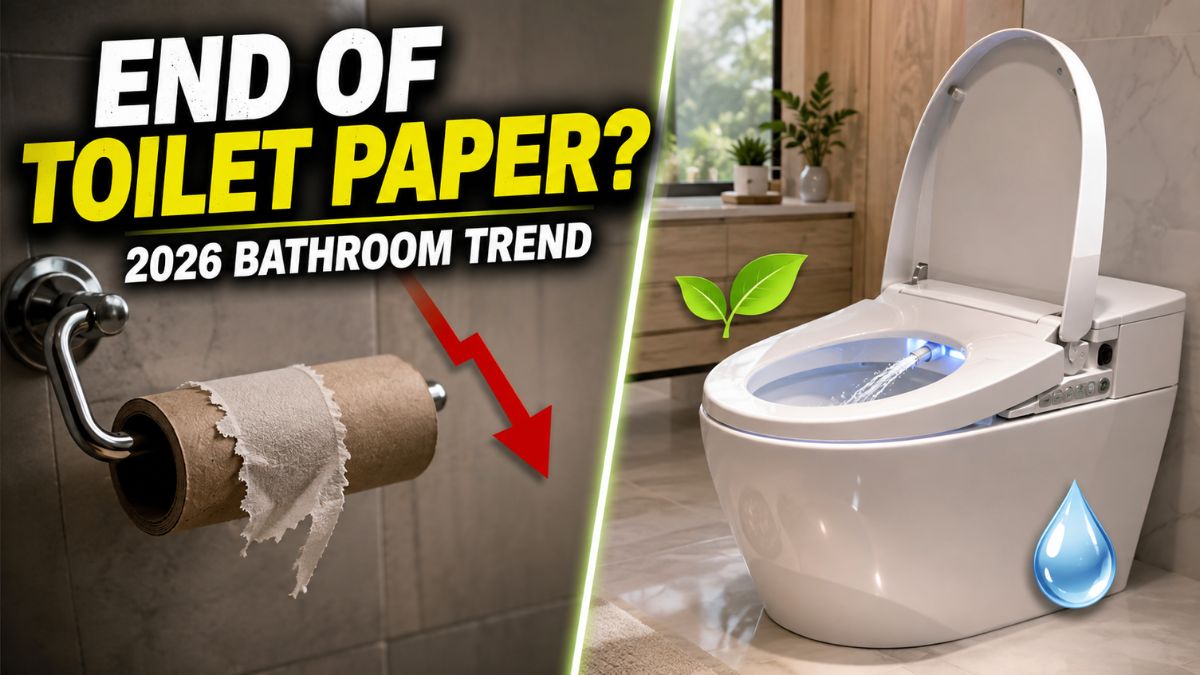
Many people never expected toilet paper to become the center of another global conversation. Yet in 2026, millions of homeowners, environmental experts, and health-conscious consumers are looking at new ways to improve bathroom hygiene while reducing waste. Rising environmental concerns, increasing awareness about personal hygiene, and smarter bathroom technology have pushed a new trend into the spotlight.
The phrase “The End of Toilet Paper in 2026” doesn’t mean toilet paper will disappear overnight. Instead, it reflects a growing movement toward water-based cleaning systems, especially bidets, bidet attachments, and other modern bathroom solutions that are becoming increasingly common across North America, Europe, and Asia. For many families, these alternatives promise cleaner hygiene, lower long-term costs, and a smaller environmental footprint.
Why Is Everyone Talking About the End of Toilet Paper in 2026?
The “end of toilet paper” trend refers to the growing shift toward water-based personal hygiene systems replacing or reducing traditional toilet paper use.
For decades, toilet paper has been the standard in many Western countries. However, several developments have changed consumer attitudes:
- Growing environmental awareness
- Higher household expenses
- Improved bathroom technology
- Better understanding of personal hygiene
- Global influence from countries where bidets are already common
Rather than replacing toilet paper completely, many households are choosing to use significantly less by incorporating modern cleaning systems.
The New Bathroom Alternative Leading the Global Trend
Modern bidets and bidet attachments use a controlled stream of water for personal cleaning after using the toilet.
Unlike traditional standalone bidets, today’s options are much simpler.
Popular alternatives include:
- Bidet toilet seats
- Handheld bidet sprayers
- Mechanical bidet attachments
- Smart electronic bidets
- Integrated smart toilets
Many of these products install directly onto existing toilets, making them accessible for homeowners and renters alike.
Why Water-Based Cleaning Is Becoming More Popular
Water-based hygiene removes residue more effectively than dry paper alone while helping reduce paper consumption.
Think about washing mud off your hands.
Most people would never wipe muddy hands with dry paper and consider them clean. Instead, they naturally reach for water.
Supporters of bidets often use this same comparison when explaining why water offers a more thorough cleaning experience.
Benefits frequently reported include:
- Better overall cleanliness
- Reduced skin irritation
- Greater comfort for sensitive skin
- Less toilet paper usage
- Improved bathroom experience
Environmental Impact: Can It Really Reduce Waste?
Toilet paper production requires trees, water, energy, transportation, and packaging, while bidets significantly reduce paper consumption.
Every roll of toilet paper has an environmental cost throughout its manufacturing process.
That includes:
- Harvesting raw materials
- Industrial processing
- Water consumption
- Chemical bleaching
- Packaging
- Shipping
Although bidets also consume resources—primarily water and, for electric models, some electricity—many environmental analysts believe reducing toilet paper use can lower overall household waste over time.
Environmental Comparison
| Factor | Traditional Toilet Paper | Water-Based Bidet |
|---|---|---|
| Paper Waste | High | Very Low |
| Tree Consumption | Significant | Minimal |
| Plastic Packaging | Frequent | Limited |
| Daily Water Use | Indirect through manufacturing | Small direct usage |
| Long-Term Sustainability | Moderate | Generally Higher |
Are Bidets More Hygienic Than Toilet Paper?
Health professionals often recognize water as an effective cleaning method, although individual needs and medical conditions vary.
Many users switch because of improved comfort rather than environmental reasons.
Water-based cleaning may be particularly appealing for people with:
- Sensitive skin
- Hemorrhoids
- Mobility limitations
- Post-surgical recovery
- Certain digestive conditions
Some users still prefer to dry with a small amount of toilet paper or a reusable towel designed specifically for bidet use.
The Financial Side: Can You Actually Save Money?
Although installing a bidet requires an upfront investment, reduced toilet paper purchases may lower long-term household expenses.
Average families purchase dozens of toilet paper packs each year.
A simple comparison looks like this:
| Expense | Toilet Paper Only | Bidet + Reduced Paper |
|---|---|---|
| Initial Cost | Low | Moderate |
| Monthly Paper Purchases | Higher | Lower |
| Maintenance | Minimal | Minimal |
| Long-Term Savings | Limited | Potentially Higher |
The actual savings depend on:
- Household size
- Toilet paper prices
- Bidet model
- Usage habits
Why the United States Is Seeing Faster Adoption
American consumers are increasingly adopting bidets due to affordability, easier installation, and greater awareness.
Several factors have accelerated adoption:
Better Product Availability
Consumers can now find affordable bidet attachments through major retailers and home improvement stores.
Smart Home Growth
As smart homes become more common, electronic bidets fit naturally into modern bathroom upgrades.
Social Media Influence
Home improvement creators, sustainability influencers, and travel bloggers frequently demonstrate bidets, helping normalize their use.
Pandemic-Era Lessons
The toilet paper shortages experienced during the early COVID-19 pandemic encouraged many households to explore permanent alternatives.
Countries Where Toilet Paper Is Already Less Common
Many regions have relied on water-based cleaning methods for decades.
Examples include:
- Japan
- South Korea
- Italy
- India
- Thailand
- United Arab Emirates
- Turkey
In Japan especially, advanced smart toilets featuring heated seats, adjustable water pressure, warm air dryers, and deodorizing systems have become standard in many homes and public facilities.
These countries demonstrate that water-based hygiene is not a new experiment—it is already an everyday routine for millions of people.
Common Myths About Replacing Toilet Paper
Myth 1: Toilet Paper Will Disappear Completely
Reality:
Most experts expect households to reduce toilet paper usage rather than eliminate it entirely.
Myth 2: Bidets Are Extremely Expensive
Reality:
Basic mechanical attachments are available at prices many homeowners consider affordable.
Myth 3: Installation Requires Remodeling
Reality:
Many modern bidet attachments install in under an hour without major plumbing modifications.
Myth 4: They Waste Too Much Water
Reality:
Although bidets use water directly, manufacturing toilet paper also consumes substantial water during production.
Who Benefits Most From This Bathroom Trend?
The shift toward modern bathroom hygiene appeals to several types of households.
It may be especially attractive for:
- Families looking to reduce recurring expenses
- Environmentally conscious homeowners
- Older adults seeking additional comfort
- Individuals with skin sensitivity
- Smart home enthusiasts
- Frequent international travelers familiar with bidets
Should You Replace Toilet Paper Completely?
Most households don’t need to eliminate toilet paper entirely to benefit from modern bathroom technology.
Many people adopt a balanced approach.
A common routine includes:
- Using a bidet for cleaning
- Using a small amount of toilet paper for drying if desired
- Gradually reducing overall paper consumption
This approach combines convenience, hygiene, and sustainability without requiring major lifestyle changes.
The Future of Bathroom Hygiene
The discussion surrounding the end of toilet paper in 2026 reflects broader changes in consumer expectations. People increasingly want products that improve comfort, reduce waste, and deliver better value over time.
While toilet paper is unlikely to vanish anytime soon, water-based cleaning systems are steadily becoming part of everyday bathrooms worldwide. As technology improves and prices continue to fall, more households are expected to explore these alternatives as a practical upgrade rather than a luxury.
FAQs
Is toilet paper really ending in 2026?
No. The phrase refers to a growing global trend rather than a complete replacement. Toilet paper remains widely available, but more households are adopting bidets and other water-based hygiene solutions to reduce paper usage, improve cleanliness, and lower long-term environmental impact.
What is the best alternative to toilet paper for most homes?
For most households, a bidet attachment or bidet toilet seat offers the most practical alternative. They install on existing toilets, use a gentle stream of water for cleaning, reduce toilet paper consumption, and provide a comfortable, hygienic experience without requiring a complete bathroom renovation.